
Ever watch a shimmering cloud of tiny fish move as one, a living, breathing silver ball? It’s one of nature’s most mesmerizing sights. These synchronized swimmers, known as schooling fish, can transform a simple aquarium into a dynamic underwater ballet. But if you’ve ever tried to set up a tank, you know the challenge: choosing the perfect group.
Many aquarists struggle with this first big step. You want a vibrant display, but picking fish that thrive together—and that won’t outgrow your tank too fast—can feel overwhelming. Will they be hardy enough? Will they nip at each other? These common worries often lead to mismatched tanks and frustrated fish keepers.
Fear not! This guide cuts through the confusion. We will explore the best, most reliable schooling fish perfect for beginners and seasoned hobbyists alike. You will learn exactly which species offer the best color, the easiest care, and the most impressive group behavior.
Ready to stop guessing and start building that stunning, unified school? Let’s dive into the vibrant world of fish that truly love to swim together.
Top Schooling Fish Recommendations

- ✅ The Emperor Tetra is known for its vibrant colors. It has a shimmering silver-blue body with a distinctive black stripe running horizontally along its midsection. Additionally, the caudal fin (tail fin) is often adorned with an orange-red coloration, providing a striking contrast
- ✅ These tetras are relatively small, reaching an average size of about 1.5 to 2 inches (3.8 to 5 cm) in length
- ✅ Emperor Tetras do well in a well-planted aquarium with plenty of swimming space. Provide hiding spots among plants and decorations. The substrate can be fine gravel or sand
- ✅ Maintain a tropical freshwater setup with a temperature range of 75°F to 82°F (24°C to 28°C). Keep the pH between 5.5 and 7.5, and the water hardness (dH) between 2 and 15
- ✅ Emperor Tetras are omnivores and will accept a variety of foods. Provide them with a balanced diet that includes high-quality flakes, pellets, and occasional live or frozen foods such as brine shrimp or daphnia

- ✅ The Gold Stripe Cory Catfish (Corydoras sp. CW010), also known as the Gold Laser Cory Catfish, is a relatively newfound species that is native to Peru
- ✅ It is rare in the aquarium hobby, but is in high demand due to its coloration of a metallic green body with a thick neon yellow stripe along its shoulder and side
- ✅ The Gold Stripe Cory Catfish is a very peaceful schooling fish that is compatible with most nano aquarium animals, including dwarf cichlids and angelfish
- ✅ It might prey on some smaller dwarf shrimp, but is safe with larger shrimp and most other peaceful ornamental invertebrates. It is a classic scavenger and will inhabit and feed at the aquarium floor, which should be comprised of sand or smooth gravel
- ✅ Very coarse substrate can damage its delicate barbels and underbelly. This fish is otherwise undemanding as it will accept most dry and frozen foods. It is adaptable to most tropical freshwater conditions as long as standard regular maintenance is performed and sudden changes are avoided
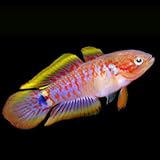
- Vibrant Peacock Gudgeon – You will receive 3 healthy Peacock Gudgeons (Tateurndina ocellicauda), known for their striking blue-green body and peacock-like markings.
- Peaceful Nano Community Fish – A calm species that pairs well with many small community fish and planted aquarium setups.
- Temperature: 72–78°F pH: 6.5–7.5 Temperament: Peaceful Diet: High-quality micro pellets, frozen foods, and small live foods
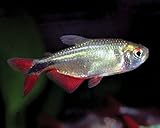
- Active schooling fish that bring constant movement to freshwater aquariums
- Silver bodies with red and black accents for added visual contrast
- Peaceful community fish suitable for planted and mixed tank setups
- Hardy species ideal for both beginners and experienced aquarists
- Healthy, tank-maintained tetras individually selected before packing and shipping

- Fish Food Tabs Required: This product requires fish food tabs to achieve the dynamic bait-chasing action, so please prepare the fish food tabs in advance. Pro tip: Slightly moisten tabs before attaching.
- 2-in-1 Floating Decor: By day — A miniature floating Zen island with a contemplative fisherman. Feeding time — Watch it transform into an underwater chase scene! Secured bait creates lifelike 'fishing' action as fish strike.
- Built for Aquatic Environments: EVA foam base + handwoven rattan platform passed 90-day freshwater tests. Fisherman uses aquarium-specific plastic. Top aquarist advice: Always rinse new decor (even natural driftwood!)
- Schooling Fish Paradise: Engineered for schooling fish under 3" (neon/rummynose/black-tailed tetras, Denison barbs, guppies etc.) & solo explorers (bettas, angelfish etc.). Keep away from large fish like arowanas — stainless plate may attract biting.
- 10-Second Lock Setup: Press fisherman onto the floating pad center for 10 seconds! For unshakable hold: Place 3-4 adhesive dots at corner points (refer to manual). Test in water and reposition until perfectly balanced.

- Bright yellow, hardy schooling fish ideal for community aquariums
- Peaceful temperament compatible with many freshwater species
- Active shoaling behavior adds movement and visual appeal
- Great for planted tanks and beginner-friendly setups
- Healthy, well-acclimated live fish packed for safe overnight arrival

- Hardy and active schooling fish for peaceful community aquariums
- Bright red fins and silver bodies add striking contrast and movement
- Ideal for planted tanks and beginner-friendly setups
- Peaceful temperament compatible with many freshwater species
- Healthy, well-acclimated live fish packed for safe overnight arrival
Choosing the Best Schooling Fish for Your Aquarium
Bringing schooling fish into your tank adds beautiful movement and life. These fish feel safest and look best when kept in groups. This guide helps you pick the right ones for your home aquarium.
Key Features to Look For
When shopping for schooling fish, check for these important features:
- Group Size Requirement: How many fish need to be kept together? Smaller fish like Neon Tetras need at least six. Larger schooling fish might need ten or more. Always buy enough to make them feel secure.
- Adult Size: Know how big the fish grows. A tiny fish in a small tank might quickly become too large. Measure your tank space first!
- Temperament: Ensure the fish is peaceful. Aggressive schoolers will stress out or harm your other tank mates.
- Hardiness: Some schooling fish handle beginner mistakes better than others. Look for hardy species if you are new to fish keeping.
Important Materials and Tank Setup
The environment you provide heavily influences your schooling fish’s health.
Water Parameters
Schooling fish often need stable water conditions. Research the required pH level and water hardness for your chosen species. You must maintain consistent temperature readings. Fluctuations stress them out immediately.
Tank Decor
These fish feel safer when they have places to hide. Use live or silk plants. Smooth rocks and driftwood also provide excellent cover. Avoid sharp decorations that might tear delicate fins.
Filtration System
Good filtration keeps the water clean. Schooling fish often produce more waste because you keep more of them in one space. A reliable filter keeps ammonia and nitrite levels low.
Factors That Improve or Reduce Quality
The quality of your purchase matters greatly.
Improving Quality
- Vibrant Coloration: Healthy fish display bright, clear colors. Dull or faded colors suggest stress or illness.
- Active Swimming: Good schoolers swim together actively in the mid-water column. They should not hover listlessly at the bottom or top.
- Clear Eyes and Gills: Check that their eyes look bright and their gills move smoothly without gasping.
Reducing Quality (What to Avoid)
- Clamped Fins: If a fish holds its fins tightly against its body, it shows sickness or stress.
- White Spots or Fuzzy Patches: These signs mean the fish likely has a disease like Ich. Do not buy sick fish.
- Separation: If the fish swims alone away from the group at the store, it is already stressed and might not integrate well.
User Experience and Use Cases
Schooling fish offer many great experiences for aquarists.
The “Schooling Effect’
The main reason people buy these fish is to see them move as one unit. When properly grouped, the entire school moves in synchronized patterns. This display is mesmerizing and relaxing to watch.
Compatibility
Most classic schoolers (like Tetras, Rasboras, and Danios) mix well with other small, peaceful community fish. They make excellent choices for a busy, active centerpiece tank.
Tank Size Considerations
If you have a small 10-gallon tank, you might only manage a small school of Endler’s Livebearers or Chili Rasboras. Larger tanks (20 gallons and up) allow for bigger schools of popular fish like Black Skirt Tetras.
10 Frequently Asked Questions (FAQ) About Schooling Fish
Q: What is the minimum number of fish needed for a school?
A: Generally, you need at least six fish of the same species. More is always better for their comfort.
Q: Can I mix different types of schooling fish together?
A: Sometimes, but it is often best to keep one species together. Check compatibility charts; for example, some Tetras do not mix well with Zebra Danios.
Q: How often should I feed my schooling fish?
A: Feed them small amounts once or twice a day. Only give them what they can eat in two minutes.
Q: Do schooling fish require special lighting?
A: No special lighting is required, but bright light helps show off their colors. Ensure they have shaded areas to retreat to.
Q: Are schooling fish difficult to care for?
A: It depends on the species. Some, like Guppies, are very hardy. Others need very stable, pristine water conditions.
Q: What happens if I don’t keep them in a group?
A: They become extremely stressed, hide constantly, and may become aggressive or weak. Stress shortens their lifespan.
Q: Should I quarantine new schooling fish?
A: Yes, always quarantine new arrivals in a separate tank for two to four weeks. This prevents introducing diseases to your main display tank.
Q: What is the lifespan of common schooling fish?
A: This varies greatly. Small Tetras might live 3 to 5 years, while some larger Danios can live 6 to 8 years with excellent care.
Q: Can schooling fish live with shrimp or snails?
A: Many small schoolers will eat baby shrimp. Larger, nippy schoolers might harass snails. Always research the specific species combination.
Q: What is the best way to cycle my tank before adding schoolers?
A: You must establish the nitrogen cycle first. This means building up beneficial bacteria to process fish waste safely before you introduce any fish.