
How far away can a cat hear? A cat can hear sounds from quite a distance, often many times further than a human can. Their exceptional auditory range allows them to detect prey, communicate, and avoid danger from afar.
Cats possess an incredibly refined sense of hearing, a vital tool that has helped their species thrive as both predators and prey. Their ability to detect sounds from a considerable distance is a testament to their evolutionary adaptations. This detailed exploration delves into the intricacies of cat hearing range, shedding light on how far away a cat can hear and the remarkable physiology that makes it possible.
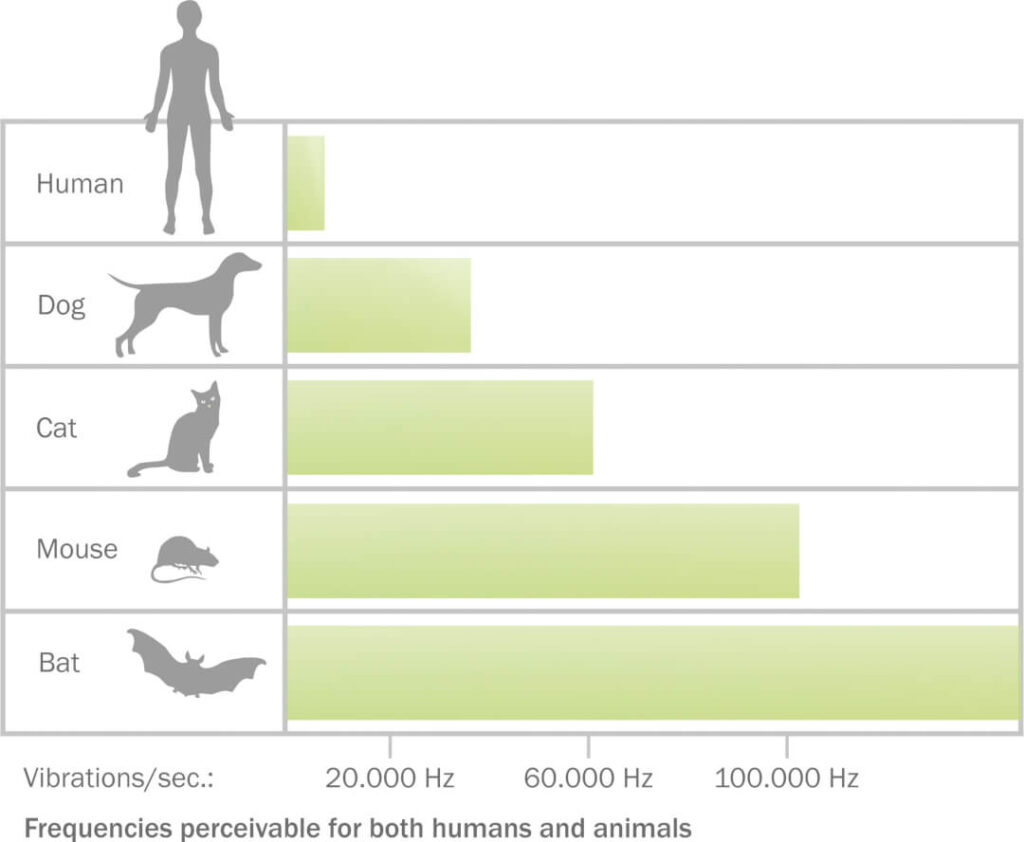
Image Source: www.catsbest.eu
The Feline Auditory Advantage
The world for a cat is a symphony of sounds, many of which are imperceptible to human ears. This enhanced auditory range is not merely a curiosity; it’s a cornerstone of their survival and daily interactions. From the faintest rustle of a mouse’s movement to the subtle shift of air currents, cats are finely tuned to their sonic environment.
Deciphering Cat Hearing Sensitivity
Feline hearing sensitivity is dramatically superior to that of humans, particularly in the higher frequency spectrum. This heightened sensitivity allows them to pinpoint the location of prey with astonishing accuracy, even when the source is hidden from view. Think of a tiny shrew rustling in the undergrowth; a cat’s ears can triangulate that sound with precision, guiding their stalk.
Exploring Frequencies Cats Can Hear
What are the frequencies cats can hear? This is where the difference between cats and humans becomes most apparent.
- Humans: Our hearing range typically spans from about 20 Hertz (Hz) to 20,000 Hz.
- Cats: Cats can hear frequencies from approximately 30 Hz up to a remarkable 65,000 Hz, and some studies suggest even higher. This means cats can hear sounds at frequencies that are far beyond our own capabilities.
This upper limit is particularly significant for detecting the ultrasonic squeaks of rodents, which often fall outside the human hearing range.
Table: Comparing Human and Cat Hearing Ranges
| Species | Lower Frequency Limit | Upper Frequency Limit | Notes |
|---|---|---|---|
| Human | 20 Hz | 20,000 Hz | Decreases with age, especially at higher frequencies. |
| Cat | 30 Hz | 65,000 Hz+ | Excellent sensitivity to high frequencies, crucial for hunting. |
The Impact of Ultrasonic Hearing
The ability for ultrasonic hearing gives cats a distinct advantage in their natural environment. Many small prey animals, such as mice and insects, communicate using high-frequency sounds that are inaudible to us. Cats can detect these subtle vocalizations, allowing them to locate prey even in complete darkness or when prey is concealed. This is a prime example of how their specialized hearing contributes to their predatory success.
The Mechanics Behind Feline Auditory Acuity
The exceptional cat hearing range and sensitivity are directly attributable to their unique cat ear anatomy. Each part of the feline ear is intricately designed to capture, amplify, and process sound waves with remarkable efficiency.
Cat Ear Anatomy: A Closer Look
A cat’s ear is a marvel of biological engineering. It consists of three main parts: the outer ear, the middle ear, and the inner ear.
The Outer Ear: Capturing Sound Waves
- Pinna (Ear Flap): This is the visible part of the ear. A cat’s pinnae are highly mobile, capable of rotating up to 180 degrees independently. This allows them to direct their ears towards the source of a sound with extreme precision, helping to localize sounds efficiently. The funnel shape of the pinna also helps to collect and funnel sound waves into the ear canal.
- Ear Canal: A narrow tube that carries sound waves from the pinna to the eardrum. The depth and shape of the cat’s ear canal also contribute to sound amplification.
The Middle Ear: Amplifying and Transmitting
- Eardrum (Tympanic Membrane): This thin membrane vibrates when sound waves strike it.
- Ossicles: Three tiny bones – the malleus (hammer), incus (anvil), and stapes (stirrup) – transmit these vibrations from the eardrum to the inner ear. These bones act as a lever system, amplifying the sound.
The Inner Ear: Processing and Interpretation
- Cochlea: A spiral-shaped cavity filled with fluid and lined with thousands of tiny hair cells. As the vibrations from the middle ear travel through the cochlea, they stimulate these hair cells.
- Auditory Nerve: The hair cells convert the mechanical vibrations into electrical signals, which are then sent to the brain via the auditory nerve. The brain interprets these signals as sound.
How Ear Shape and Muscles Enhance Hearing
The structure of the cat’s ear is crucial. The large, mobile pinnae act like satellite dishes, capable of swiveling to pinpoint the exact direction of a sound. The cartilaginous structure of the ear is also designed to resonate with specific frequencies, further enhancing their ability to pick up subtle noises. The complex network of muscles attached to the pinnae gives cats an incredible level of control over their ear orientation, allowing for rapid adjustments as they scan their environment for auditory cues.
How Far Away Can A Cat Hear? Factors Influencing Cat Hearing Distance
The question of how far away can a cat hear is not a simple one with a single numerical answer. Several factors influence the cat hearing distance, including the intensity of the sound, the frequency of the sound, the surrounding environment, and the cat’s individual health.
Sound Intensity (Loudness)
Like any hearing organ, a cat’s ears need a certain level of sound intensity to register a noise. A very faint sound, even if within their frequency range, might not be detectable from a great distance. Conversely, a loud sound can be heard from much further away.
Sound Frequency
As discussed, cats excel at hearing high-frequency sounds. They can detect these sounds from further away than they can lower-frequency sounds of the same intensity. This is why the ultrasonic chirps of prey are so readily audible to them from a distance.
Environmental Factors
- Obstacles: Walls, furniture, and dense vegetation can block or muffle sound waves, reducing the cat hearing distance.
- Ambient Noise: In a noisy environment, such as a busy street or a household with multiple appliances running, a cat’s ability to detect fainter sounds from a distance will be compromised by the background noise. This is similar to how difficult it is for humans to hear a quiet conversation in a crowded room.
- Open Spaces: In open, quiet areas, sounds travel further, and a cat can likely detect them from a greater distance.
Individual Cat Factors
- Age: Kittens may have developing hearing, and older cats can experience a decline in their auditory capabilities, particularly at higher frequencies, similar to age-related hearing loss in humans.
- Genetics: Certain breeds or individual cats may have naturally better or worse hearing.
- Cat Ear Health: Issues like ear infections, wax buildup, or damage to the ear canal or middle ear can significantly impair a cat’s hearing and thus reduce the cat hearing distance.
Sound Perception in Cats: More Than Just Hearing
Sound perception in cats encompasses not just the ability to detect sounds but also how their brains interpret and react to them. This perception is deeply intertwined with their instincts and behaviors.
The Role of Hearing in Predatory Behavior
A cat’s hunting strategy relies heavily on its hearing. The ability to hear the tiny movements of prey, like a scurrying mouse or a fluttering insect, from across a room or even through walls, is fundamental to their predatory success. They use this auditory information to:
- Locate Prey: Pinpointing the exact position of prey is crucial.
- Track Prey: Following the subtle sounds of movement as prey moves.
- Ambush: Anticipating prey movement to position themselves for a surprise attack.
Hearing and Communication: Cat Vocalizations
Cats use a variety of cat vocalizations to communicate, and their hearing plays a vital role in both producing and interpreting these sounds.
- Meows: While often directed at humans, meows can also be used to communicate with other cats, though less frequently than other vocalizations.
- Purrs: Convey contentment and self-soothing.
- Hisses and Growls: Warnings and expressions of aggression or fear.
- Chirps and Trills: Friendly greetings or calls for attention, often used between mother cats and kittens.
- Yowls and Screams: Associated with distress, pain, or intense territorial disputes.
Their acute hearing allows them to discern the subtle nuances in these vocalizations, understanding the emotional state and intentions of other cats.
Interpreting Auditory Cues for Safety
Beyond hunting, sound perception in cats is critical for their safety. They can detect the approach of larger animals, potential threats, or even the sound of their owner’s car arriving home, allowing them to react accordingly – either by seeking refuge or by preparing for a welcoming interaction.
Dog vs. Cat Hearing: A Comparative Perspective
When comparing dog vs. cat hearing, both species possess remarkable auditory capabilities, but there are subtle differences in their specialization.
Canine Auditory Prowess
Dogs also have an excellent sense of hearing, with an auditory range that extends to about 45,000 Hz. Their hearing is particularly sensitive to sounds in the middle to high frequency range, which is why specialized dog whistles are designed to be heard by them but not by humans. Dogs use their hearing extensively for:
- Following Commands: Responding to verbal cues.
- Detecting Danger: Alerting their owners to unusual sounds.
- Social Bonding: Recognizing the sounds of their human companions.
Key Differences
| Feature | Cat Hearing | Dog Hearing |
|---|---|---|
| Upper Limit | Up to 65,000 Hz+ | Up to 45,000 Hz |
| Sensitivity | Exceptionally high in ultrasonic range | Excellent, but less sensitive in the extreme ultrasonic range |
| Ear Mobility | More pronounced, greater independent rotation | Good, but generally less independent than cats |
| Primary Use | Predatory hunting (detecting small prey vocalizations) | Detection, communication, response to human cues |
While dogs can hear a wide range of sounds, cats’ exceptional ability to hear in the ultrasonic spectrum gives them an edge in detecting the subtle vocalizations of their preferred prey.
Maintaining Cat Ear Health
Given the importance of hearing for a cat’s well-being and survival, maintaining cat ear health is crucial. Regular observation and proper care can help prevent issues that might impair their auditory range.
Signs of Ear Problems in Cats
It’s important for owners to be aware of potential signs of ear problems. These can include:
- Head Shaking or Scratching: Excessive or persistent head shaking or scratching at the ears.
- Discharge: Any unusual discharge from the ear canal, which can be waxy, pus-like, or bloody.
- Odor: A foul or unpleasant smell emanating from the ears.
- Redness or Swelling: Inflammation within or around the ear canal.
- Loss of Balance or Disorientation: In severe cases, ear infections can affect the inner ear, leading to balance problems.
- Hearing Loss: A noticeable decrease in response to sounds or calls.
Common Causes of Hearing Impairment
Several factors can lead to compromised hearing in cats:
- Ear Infections: Bacterial or fungal infections are common causes of inflammation and pain, which can affect hearing.
- Ear Mites: Tiny parasites that infest the ear canal, causing irritation and potential secondary infections.
- Allergies: Environmental or food allergies can manifest as itchy skin, including in the ears.
- Trauma: Physical injury to the ear can damage the delicate structures.
- Age-Related Degeneration: As cats age, the structures within the ear can degenerate, leading to gradual hearing loss.
- Congenital Issues: Some cats may be born with hearing impairments.
How to Support Cat Ear Health
- Regular Inspections: Gently look inside your cat’s ears during routine grooming. Check for any signs of redness, discharge, or unusual odors.
- Gentle Cleaning (if needed): If you notice a small amount of wax buildup, you can clean the outer part of the ear gently with a vet-approved ear cleaner and a cotton ball. Never insert anything deep into the ear canal.
- Veterinary Care: If you suspect any ear problems, consult your veterinarian immediately. They can diagnose the issue and prescribe appropriate treatment, such as antibiotics, antifungals, or ear mite medication.
- Safe Environment: Protect your cat from loud noises that could potentially damage their hearing.
Frequently Asked Questions (FAQ)
Can cats hear sounds from across a football field?
While cats have excellent hearing, the exact distance depends on many factors, including sound intensity, frequency, and environmental conditions. In ideal, quiet conditions, a loud sound could potentially be heard from a considerable distance, perhaps hundreds of feet, but it’s unlikely they could discern specific details or the source from quite that far. Their ability to locate the source accurately is usually within a more limited range.
Do cats hear better than dogs?
Cats generally have a superior auditory range in the higher frequencies, particularly the ultrasonic range, which is advantageous for hunting small prey. Dogs have a good overall hearing range and are adept at responding to a wider variety of vocal commands and sounds relevant to their roles alongside humans. It’s more about specialization than a simple “better or worse” comparison.
Why do cats twitch their ears?
Cats twitch their ears to pinpoint the exact source of a sound. Their ears are like radar dishes, and by moving them, they can triangulate the direction and proximity of a noise, whether it’s a potential prey animal, a threat, or a familiar sound like their owner’s voice.
Can a cat lose its hearing due to loud noise?
Yes, just like humans, cats can suffer hearing damage from prolonged exposure to very loud noises. This can lead to temporary or permanent hearing loss. It’s advisable to keep cats away from extremely loud environments.
Is it normal for a cat’s ears to be warm?
A slight warmth is normal, as blood circulates through their ears. However, if the ears are hot to the touch, red, or accompanied by other signs of discomfort, it could indicate an infection or inflammation, and a vet visit is recommended.
In conclusion, a cat’s hearing is a finely tuned instrument, allowing them to perceive a world of sound far richer and more detailed than our own. Their impressive auditory range, coupled with sophisticated cat ear anatomy, enables them to excel in hunting, communication, and navigating their environment, making them truly masters of their sonic domain.