
So, you want to know how to say “cat” in different languages? It’s a simple question with a fascinating global answer. The word for “cat” varies across the world, reflecting the rich tapestry of human languages and our long-standing relationship with these beloved animals. From familiar European tongues to more distant dialects, exploring these feline terms worldwide offers a delightful glimpse into our shared global pet vocabulary.
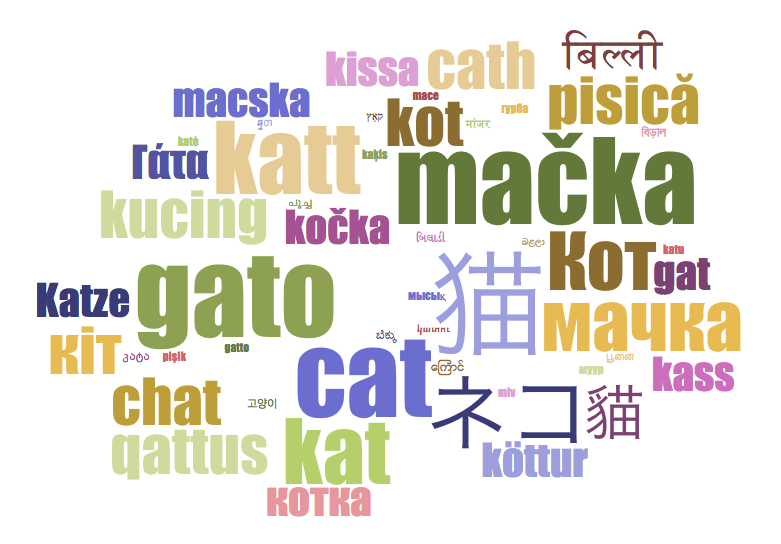
Image Source: lingo-apps.com
The Universality of the Feline Companion
Cats have roamed alongside humans for millennia, weaving themselves into the fabric of cultures across continents. Their stealthy grace, independent spirit, and comforting purrs have earned them a special place in our hearts and homes. It’s no surprise that nearly every language on Earth has a word for this ubiquitous animal. Delving into the animal names in multiple tongues reveals not just linguistic diversity but also shared human experiences and affections. Whether you’re traveling abroad or simply curious about our furry friends, knowing how to refer to them in various languages can be both practical and enriching. This exploration into the world’s cat names is an invitation to connect with a broader linguistic and cultural landscape.
A Journey Through Global Feline Terms
Let’s embark on a linguistic adventure to discover how to say “cat” in different languages. We’ll uncover the nuances, origins, and sometimes surprising similarities in these international feline terms. This is more than just a translation; it’s about recognizing the common thread of our appreciation for these creatures, no matter where we are.
European Tongues: Familiar Sounds and Roots
Europe, with its long history of human civilization and diverse linguistic families, offers a wealth of ways to refer to our feline friends. Many of these words share common roots, tracing back to ancient times.
Romance Languages: Latin’s Lasting Legacy
The Romance languages, descended from Latin, often feature words for “cat” that are quite similar. This shared ancestry makes the translation for cat in these regions remarkably consistent.
- Spanish: Gato
- The Spanish word gato is directly derived from the Latin cattus. It’s a straightforward and widely recognized term.
- French: Chat
- Similarly, the French chat also comes from the Latin cattus. The pronunciation differs slightly, but the origin is clear.
- Italian: Gatto
- Gatto in Italian is another clear descendant of Latin, maintaining the ‘tt’ sound from its ancestor.
- Portuguese: Gato
- Portuguese, like Spanish, uses gato, reflecting their common Iberian heritage and Latin roots.
- Romanian: Pisică
- While many Romance languages stick close to the Latin cattus, Romanian offers a different word, pisică. The etymology here is less clear, with some theories suggesting a connection to Slavic languages or even onomatopoeia.
Germanic Languages: Variations on a Theme
The Germanic language family, while distinct from Romance, also shows connections in its feline terms worldwide.
- English: Cat
- Our familiar word “cat” comes from Old English catt, which itself likely has roots in Late Latin cattus. It’s a testament to how deeply embedded these animals are in our language.
- German: Katze
- German’s Katze is a close relative of the English “cat,” both stemming from common Germanic and ultimately Latin influences.
- Dutch: Kat
- The Dutch word kat is very similar to English and German, again pointing to shared linguistic ancestry.
- Swedish: Katt
- Swedish also uses katt, showcasing the strong ties within the North Germanic branch.
- Norwegian: Katt
- Norwegian mirrors Swedish with its simple and direct katt.
- Danish: Kat
- Danish completes the Scandinavian trio with kat.
Slavic Languages: A Different Branch
The Slavic languages present a more diverse set of words, often deviating from the Latin-based terms.
- Russian: Кошка (Koshka) / Кот (Kot)
- Russian uses two primary words. Кошка (koshka) generally refers to a female cat or cats in general, while кот (kot) specifically denotes a male cat. Their origin is thought to be onomatopoeic, mimicking the sound cats make, or possibly linked to ancient Turkic words.
- Polish: Kot
- Polish kot is very similar to the Russian kot, suggesting shared Slavic roots or influences.
- Czech: Kočka / Kocour
- Similar to Russian, Czech distinguishes between kočka (female/general) and kocour (male).
- Serbian/Croatian: Mačka / Mačak
- These languages use mačka for female/general cats and mačak for male cats. The origin of mačka is less certain, possibly related to words meaning “to lick” or “to groom.”
Other European Languages
- Greek: Γάτα (Gáta)
- Modern Greek gáta is similar to the Romance words, likely influenced by contact and the prevalence of the Latin term.
- Irish Gaelic: Cat
- Unsurprisingly, the Irish word cat is a direct cognate of the English word, showing a shared Celtic and Indo-European past.
- Welsh: Cath
- Welsh cath also shares this ancient lineage with English and Irish.
- Finnish: Kissa
- Finnish, though not Indo-European, shares a curious similarity with kissa. This might be due to borrowing from neighboring Germanic languages or a coincidental onomatopoeic development.
Asian Languages: Diverse Origins and Meanings
Asia, a continent of immense linguistic diversity, offers a fascinating array of different languages for feline species. The origins of these words are varied, sometimes reflecting cultural interactions, onomatopoeia, or unique historical developments.
East Asian Languages
- Mandarin Chinese: 猫 (Māo)
- The Mandarin word māo is a monosyllabic term that is believed to be onomatopoeic, mimicking the sound of a cat. It’s a simple, direct word used universally in China.
- Japanese: 猫 (Neko)
- Japanese uses the character 猫 (neko) for cat. The origin of neko is not definitively known, but theories include onomatopoeia or connections to words meaning “to sleep” or “to lick.”
- Korean: 고양이 (Goyangi)
- Korean’s goyangi is another distinct term. Its etymology is also debated, with some suggesting it might have originated from a descriptive phrase related to the cat’s behavior.
South Asian Languages
- Hindi: बिल्ली (Billī)
- In Hindi, the word for cat is billī. The origin is not definitively known, but it is a common term across Northern India.
- Bengali: বিড়াল (Biṛal)
- Bengali uses biṛal. Like Hindi, its exact linguistic roots are not clearly established, but it is the standard term.
Southeast Asian Languages
- Vietnamese: Mèo
- Vietnamese mèo is a monosyllabic word, often considered to be onomatopoeic in origin.
- Thai: แมว (Maew)
- Thai maew is another instance of an onomatopoeic word for cat, mimicking the feline’s vocalization.
- Indonesian/Malay: Kucing
- The word kucing is used in both Indonesian and Malay. Its etymology is somewhat obscure, but it’s the universally accepted term in these languages.
West Asian and Central Asian Languages
- Arabic: قطة (Qiṭṭah) / بِسّة (Bissah)
- Arabic commonly uses qiṭṭah for a female cat or cat in general, and qiṭṭ for a male cat. Another common term, particularly in colloquial dialects, is bissah or bis. The origin of qiṭṭah is thought to be onomatopoeic.
- Hebrew: חתול (Chatul)
- Hebrew uses chatul for a male cat and chatulah for a female cat. The word is believed to have Semitic origins, possibly related to words meaning “to be nimble” or “to jump.”
- Turkish: Kedi
- Turkish kedi is quite distinct. Its origins are debated, with some suggesting it might be an old Turkic word, while others propose it was borrowed from Persian or even Slavic languages.
African Languages: Richness and Variety
Africa boasts an incredible diversity of languages, and the words for “cat” reflect this richness. These terms often have unique origins, sometimes tied to local mythology or descriptive observations.
- Swahili: Paka
- Swahili, a widely spoken Bantu language, uses paka. The origin of this word is not definitively known, but it is the standard term across East Africa.
- Zulu: Ikati
- In Zulu, the word for cat is ikati. This word shares similarities with other Bantu languages, hinting at a common linguistic ancestor within the family.
- Yoruba: Ologbo
- Yoruba, spoken in West Africa, uses ologbo. This word is more descriptive, with olo meaning “owner” or “one who has,” and igbo meaning “bush.” Thus, it could imply “owner of the bush” or a creature of the wild.
- Hausa: Kare
- Hausa uses kare. Its etymology is not definitively clear but is the common term in many parts of West Africa.
Indigenous American Languages: Ancient Connections
Many indigenous languages of the Americas have their own unique terms for cats, often reflecting different relationships and classifications of animals.
- Navajo: Mósí
- The Navajo word for cat is mósí. Its origin is not clearly established, but it is the accepted term.
- Quechua: Misi
- Quechua, spoken in the Andes, uses misi. This word is believed to be onomatopoeic or borrowed from Spanish mishito (diminutive of micho, a common term for cat in some Spanish dialects).
- Guarani: Mbarakaja
- The Guarani word mbarakaja is quite distinctive and often associated with the jaguarundi, a small wild cat native to the Americas, suggesting a historical connection to native felines.
Deciphering the Roots: Why So Many Words?
The variety in how we say “cat” across languages can be attributed to several factors:
1. Onomatopoeia: Mimicking the Sound
Many words for “cat” are believed to originate from imitating the sounds cats make, such as “meow” or “purr.” This is a common way animal names develop in languages worldwide. Think of the similarities between māo (Chinese), maew (Thai), and mèo (Vietnamese). This is a fascinating aspect of animal communication in other languages.
2. Borrowing and Language Contact
As cultures interact, languages borrow words from each other. The prevalence of the Latin cattus meant that many European languages adopted similar terms. Likewise, the spread of domestic cats across continents likely facilitated the borrowing of terms. This is how global pet vocabulary expands and evolves.
3. Ancient Roots and Indo-European Connections
For languages within the same family, like Indo-European languages (Romance, Germanic, Slavic, Celtic, Indo-Iranian), shared ancient roots often lead to similar-sounding words for fundamental concepts, including animals.
4. Descriptive Origins
Some words might have originated from a description of the animal’s appearance, behavior, or its habitat. For example, the Yoruba word ologbo might have roots in describing a wild or bush-dwelling creature.
5. Local Evolution and Uniqueness
Every language evolves independently to some extent. Unique historical circumstances, cultural contexts, and random linguistic shifts can lead to entirely distinct words for the same concept. The Romanian pisică or the Korean goyangi are examples of words that don’t immediately trace back to the most common Latin or onomatopoeic origins.
The Art of Speaking Cat in Other Languages
Knowing these words allows you to engage with people from different cultures on a common ground, even if it’s just about a shared love for cats. It’s a subtle yet powerful way to show respect and interest in their language and culture. When you ask someone about their chat in French or their koshka in Russian, you’re opening a small door to connection. This is how you speak cat in other languages.
Here’s a quick reference table summarizing some of the most common ways to say “cat”:
| Language | Word (Script) | Word (Transliteration/Pronunciation) | Notes |
|---|---|---|---|
| English | Cat | Cat | Germanic origin |
| Spanish | Gato | Gato | From Latin |
| French | Chat | Sha | From Latin |
| German | Katze | Kat-seh | Germanic origin |
| Italian | Gatto | Gat-toh | From Latin |
| Portuguese | Gato | Ga-toh | From Latin |
| Russian | Кошка | Koshka | Female/general; possibly onomatopoeic |
| Кот | Kot | Male | |
| Mandarin Chinese | 猫 | Māo | Onomatopoeic |
| Japanese | 猫 | Neko | Origin debated |
| Arabic | قطة | Qiṭṭah | Female/general; possibly onomatopoeic |
| Hindi | बिल्ली | Billī | Standard term |
| Swahili | Paka | Pa-ka | Standard term |
| Turkish | Kedi | Keh-dee | Origin debated |
| Greek | Γάτα | Gáta | Similar to Romance words |
| Hebrew | חתול | Chatul | Semitic origin |
| Korean | 고양이 | Goyangi | Origin debated |
| Vietnamese | Mèo | Meow | Onomatopoeic |
| Thai | แมว | Maew | Onomatopoeic |
| Polish | Kot | Kot | Slavic cognate |
| Dutch | Kat | Kat | Germanic cognate |
| Swedish | Katt | Kat | Germanic cognate |
| Irish Gaelic | Cat | Cat | Cognate with English |
This table provides a glimpse into the animal names in multiple tongues, specifically focusing on our feline friends. It highlights the commonality and diversity that exist within human language.
Beyond the Word: The Language of Cats
While we learn to say “cat” in different human languages, it’s also worth remembering the language of cats themselves. Their purrs, meows, hisses, and body language are their own form of communication, which, thankfully, transcends any single human tongue. Learning about these vocalizations and behaviors can enhance our connection with cats, fostering better animal communication in other languages through empathy and observation.
This journey through different languages for feline species is a reminder of the interconnectedness of humanity and the natural world. Each word is a small piece of a much larger puzzle, showcasing how different cultures perceive and interact with the same beloved creature.
Frequently Asked Questions (FAQ)
Q1: Are there any languages where the word for “cat” sounds very similar to English?
Yes, many languages, particularly those within the Germanic and Romance families, have words for “cat” that sound quite similar to the English word “cat.” Examples include German (Katze), Dutch (Kat), Swedish (Katt), French (Chat), Spanish (Gato), Italian (Gatto), and Portuguese (Gato). This similarity is often due to shared linguistic roots, tracing back to ancient Indo-European languages and later influences from Latin.
Q2: What is the origin of the word “cat”?
The English word “cat” likely originates from Old English “catt,” which itself is believed to have come from Late Latin “cattus.” This Latin term became widespread during the Roman Empire and was adopted by many European languages. Theories suggest the ultimate origin might be onomatopoeic (imitating the sound a cat makes) or possibly derived from an Afro-Asiatic language.
Q3: Why are there so many different words for “cat” around the world?
The diversity in words for “cat” stems from several factors:
* Independent Language Development: Languages evolve separately in different regions, leading to unique word formations.
* Onomatopoeia: Many words mimic the sounds cats make (e.g., “meow,” “purr”).
* Borrowing: Words are borrowed between languages due to cultural contact and trade.
* Shared Roots: Languages within the same family often share ancient word origins.
* Descriptive Origins: Some words might describe the cat’s appearance or behavior.
Q4: Can knowing the word for “cat” in other languages help me communicate with people?
Yes, learning basic words like “cat” in different languages can be a great icebreaker and a way to show respect and interest in someone’s culture. While it won’t enable complex conversations, it can foster goodwill and make interactions more personal, especially if the person you’re speaking with also loves cats. It’s a simple yet effective way to build rapport.
Q5: Are there any languages where the word for “cat” is very unusual or descriptive?
While many words are simple and direct, some languages have more descriptive or unusually rooted terms for “cat.” For example, in Yoruba (West Africa), the word is Ologbo, which might translate to something like “owner of the bush” or “bush dweller,” possibly reflecting an ancient perception of cats as wilder or more independent creatures. The Guarani word Mbarakaja is also distinct and has associations with native wild cat species. These examples showcase the fascinating variations in how cultures conceptualize and name even common animals.