
Deciphering the exact number of calories in Friskies canned cat food is crucial for responsible pet ownership, ensuring your feline friend receives adequate nutrition without over or underfeeding. Generally, Friskies canned cat food contains approximately 80 to 100 calories per 3-ounce can, though this can vary slightly depending on the specific flavor and formula.
Owning a cat is a joy, but it also comes with the responsibility of ensuring they eat right. For many cat parents, Friskies is a familiar brand found on grocery store shelves. But when it comes to feeding time, the question often arises: “How many calories are in this Friskies can?” This guide is here to help you navigate the Friskies calorie content and make informed decisions about your cat’s diet.
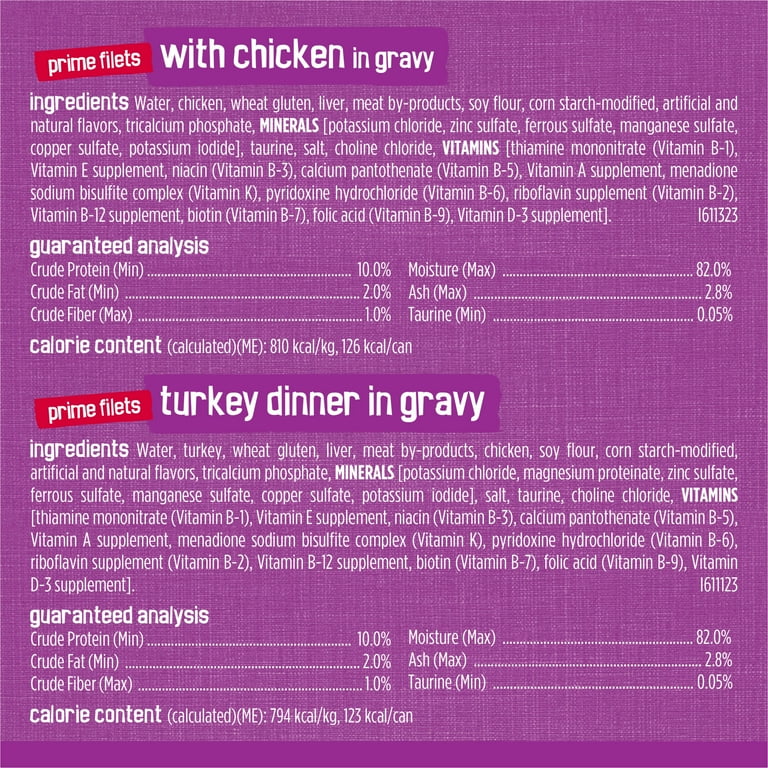
Image Source: i5.walmartimages.com
Fathoming Friskies Canned Food Calories
Cats have unique dietary needs. They are obligate carnivores, meaning they must eat meat to survive. Their diet should be rich in protein, with moderate amounts of fat and very little carbohydrates. Understanding the calorie count of their food is key to managing their weight, energy levels, and overall health. Friskies canned food offers a variety of flavors and textures, from smooth pâtés to savory shreds in gravy, each with its own calorie profile.
The Basics of Calorie Counting for Cats
Before diving into specific Friskies products, it’s helpful to grasp a few basics about cat nutrition and calories.
- Metabolizable Energy (ME): This refers to the energy available to your cat from their food after digestion and absorption. Manufacturers typically list ME in kilocalories (kcal) per kilogram or per can.
- Daily Calorie Needs: A cat’s daily calorie needs depend on several factors:
- Age: Kittens need more calories for growth, while senior cats may need fewer.
- Activity Level: A playful, active cat burns more calories than a sedentary one.
- Body Weight and Condition: Overweight cats need fewer calories to lose weight, while underweight cats may need more.
- Reproductive Status: Pregnant or nursing cats have significantly higher calorie requirements.
- Health Status: Certain medical conditions can affect a cat’s metabolic rate and calorie needs.
As a general guideline, an average adult cat weighing around 10 pounds and with a moderate activity level typically needs between 200 and 250 kcal per day. However, this is just a starting point, and individual needs can vary greatly.
Decoding Friskies Nutrition Facts
The most reliable way to find the Friskies calorie content for a specific product is to check the packaging or the manufacturer’s website. The Friskies nutrition facts label will provide detailed information about the calorie count, as well as the breakdown of protein, fat, fiber, and essential vitamins and minerals.
You’ll often see calories listed per serving or per container. It’s important to distinguish between these. A “serving size” on the can is often a recommendation for feeding, but it’s always best to cross-reference this with your veterinarian’s advice.
Friskies Calorie Content: A Closer Look at Popular Varieties
Friskies offers a wide array of canned cat food options. Let’s break down the Friskies calorie content for some of their popular lines, focusing on the Friskies canned food calories you’re most likely to encounter.
Friskies Pate Calories
Pâté style foods are often a favorite among cats due to their smooth texture. The Friskies pate calories are generally quite consistent across their various pâté flavors.
- Typical Friskies Pate: Most 3-ounce cans of Friskies pâté, such as “Savory Salmon Dinner” or “Chicken & Tuna Dinner,” contain approximately 85-95 kcal per can.
- Friskies Pate Nutrition: These pâtés are typically formulated to be a complete and balanced meal for cats, providing essential nutrients. The Friskies pate nutrition profile usually indicates a good source of protein from animal-based ingredients.
Table 1: Approximate Calories in Select Friskies Pâté Varieties (per 3 oz can)
| Flavor | Approximate Calories (kcal) |
|---|---|
| Friskies Savory Salmon | 90 |
| Friskies Chicken & Tuna | 92 |
| Friskies Turkey & Giblets | 88 |
| Friskies Ocean Whitefish & Tuna | 95 |
Note: These are approximate values and can vary slightly by batch.
Friskies Gravy Lovers Calories
For cats who adore a rich gravy, the “Gravy Lovers” line is a popular choice. The addition of gravy can sometimes influence the Friskies gravy lovers calories compared to plain pâtés.
- Typical Friskies Gravy Lovers: A 3-ounce can of Friskies Gravy Lovers, such as “Chicken Supreme in Gravy” or “Tuna Delight in Gravy,” typically falls in the range of 90-100 kcal per can. The higher moisture content from the gravy itself doesn’t significantly alter the caloric density per can, but it’s important to note.
- Friskies Nutrition Facts: The Friskies nutrition facts for these products will highlight the protein and fat content, which are the primary drivers of calories.
Table 2: Approximate Calories in Select Friskies Gravy Lovers Varieties (per 3 oz can)
| Flavor | Approximate Calories (kcal) |
|---|---|
| Friskies Chicken Supreme in Gravy | 98 |
| Friskies Tuna Delight in Gravy | 96 |
| Friskies Savory Shreds Turkey in Gravy | 94 |
Friskies Moist Calories and Other Textures
Beyond pâtés and gravy-based meals, Friskies also offers foods with different textures, like shreds or morsels. The term Friskies moist calories is a broad description, but it generally refers to the canned varieties.
- Shredded/Morsel Styles: These types of Friskies canned food also tend to hover around the 80-100 kcal per 3-ounce can mark. The texture doesn’t drastically change the calorie density as much as the core ingredients and their fat content do. For example, Friskies Shreds or Morsels in Sauce will have a similar calorie count Friskies to their pâté counterparts.
Table 3: Approximate Calories in Select Friskies Shredded/Morsel Varieties (per 3 oz can)
| Flavor | Approximate Calories (kcal) |
|---|---|
| Friskies Shredded Chicken in Sauce | 91 |
| Friskies Shredded Turkey in Sauce | 89 |
| Friskies Morsels with Beef in Gravy | 93 |
Friskies Cat Food Calorie Chart: General Reference
To provide a broader overview, here’s a generalized Friskies cat food calorie chart. Remember to always check your specific product for the most accurate information.
Table 4: General Friskies Canned Food Calorie Ranges (per 3 oz can)
| Product Type | Approximate Calorie Range (kcal) |
|---|---|
| Friskies Pâté | 85 – 95 |
| Friskies Gravy Lovers | 90 – 100 |
| Friskies Shreds/Morsels | 80 – 100 |
| Friskies Kitten Formula | 95 – 105 (often slightly higher) |
| Friskies Senior Formula | 80 – 90 (often slightly lower) |
Friskies Serving Size Calories: Practical Application
Knowing the Friskies serving size calories is only half the battle; the other half is applying it to your cat’s daily intake. The feeding guidelines on the Friskies packaging are a good starting point, but they are not definitive.
A common guideline is to feed 1 can (3 ounces) for every 3-4 pounds of body weight per day, divided into two or more meals.
- Example Calculation:
- Let’s say you have a 10-pound cat.
- Using the guideline, you might feed approximately 2.5 to 3.3 cans per day (10 lbs / 3-4 lbs per can).
- If each can is around 90 kcal, then 3 cans would be about 270 kcal. This falls within the typical daily requirement for a moderately active 10-pound cat.
However, this is a simplified example. It’s crucial to adjust based on your cat’s individual needs.
Factors Influencing Friskies Calorie Count
While the calorie count Friskies appears consistent across many products, subtle variations can occur due to:
- Ingredient Variations: Different protein sources (chicken, beef, fish) and the amount of fat they contain can slightly alter the calorie density.
- Moisture Content: Foods with more gravy or broth might have a slightly different moisture-to-solids ratio, which can affect the Friskies canned food calories on a per-can basis, though the caloric density per gram of food is more important.
- Additives: Some formulas might include added carbohydrates or fats for palatability or specific nutritional benefits, which can impact the overall calorie count.
Friskies Pate Nutrition: A Deeper Dive
When looking at Friskies pate nutrition, you’ll typically find it’s formulated to meet AAFCO (Association of American Feed Control Officials) standards for a complete and balanced diet. This means it provides the necessary macronutrients and micronutrients.
- Protein: High protein content is vital for cats. Friskies pâtés generally offer a good source of animal protein, essential for muscle maintenance and overall bodily functions.
- Fat: Fat is another energy-dense nutrient that cats need. The fat content in Friskies pâtés contributes to palatability and provides essential fatty acids.
- Carbohydrates: Cats have limited needs for carbohydrates. Friskies, like most commercial cat foods, will contain some carbohydrates from ingredients like grains or vegetables, but they are generally kept low.
The Importance of Reading the Label
The most accurate way to determine Friskies nutrition facts and calories is to read the label on the specific can you are using. The manufacturer is legally required to provide this information. Look for the “Guaranteed Analysis” and the “Calorie Statement.”
- Guaranteed Analysis: This section provides the minimum percentages of crude protein and crude fat, and the maximum percentages of crude fiber and moisture.
- Calorie Statement: This will usually state something like “850 kcal/kg” or “85 kcal/can.” If it’s given per kg, you’ll need to do a simple calculation to find it per can.
Calculating Calories from Guaranteed Analysis (Advanced)
While not necessary for most cat owners, it’s possible to estimate calories using the guaranteed analysis if a direct calorie statement is absent. This involves using standard caloric values for protein (4 kcal/gram), fat (9 kcal/gram), and carbohydrates (4 kcal/gram). You would need to convert percentages to grams and factor in moisture content. However, as mentioned, Friskies reliably provides a direct calorie count on their packaging.
Managing Your Cat’s Weight with Friskies
Knowing the Friskies serving size calories is essential for weight management.
Overweight Cats and Friskies
If your cat is overweight, you’ll need to adjust their feeding. This often involves:
- Consult Your Veterinarian: This is the most crucial step. Your vet can assess your cat’s body condition, recommend a target weight, and calculate a specific daily calorie intake.
- Measure Food Accurately: Use a kitchen scale or a standard measuring cup to ensure you’re feeding the correct amount. Don’t “eyeball” it.
- Reduce Portions Gradually: Drastic calorie reduction can be harmful. Follow your vet’s recommendations for a slow, steady weight loss.
- Consider Calorie-Controlled Formulas: While Friskies is a popular brand, if your cat needs significant weight loss, your vet might suggest a specific veterinary diet designed for weight management.
Underweight Cats and Friskies
If your cat is underweight, they may need an increase in calories. Again, consulting your veterinarian is paramount to rule out any underlying medical conditions. They can help you determine the appropriate calorie increase and how to best incorporate it into your cat’s diet using Friskies or a recommended alternative.
Monitoring and Adjustment
- Regular Weigh-ins: Weigh your cat regularly (e.g., monthly) to track progress.
- Observe Body Condition: Learn to feel your cat’s ribs (they should be easily palpable but not visible) and check for a visible waist tuck when looking from above.
- Adjust as Needed: Based on your vet’s guidance and your cat’s progress, you may need to adjust the amount of Friskies you feed.
Friskies Nutrition Facts vs. Other Brands
It’s worth noting that the Friskies calorie content is generally comparable to many other mainstream wet cat food brands. However, premium or prescription diets may have different calorie densities, ingredient quality, and nutrient profiles. The “best” food is always the one that meets your cat’s individual nutritional needs and is tolerated well by their system.
The Friskies nutrition facts often show a balance of nutrients suitable for many cats, but individual sensitivities or specific dietary needs (like for kidney disease or urinary tract health) might necessitate a different product.
Frequently Asked Questions About Friskies Calories
Here are some common questions cat owners ask regarding Friskies canned food calories:
Q1: How many calories are in a typical 5.5 oz can of Friskies?
A 5.5 oz can of Friskies canned cat food generally contains around 160-180 kcal. This is roughly double the calories of a 3 oz can, though it’s always best to check the specific product’s label as variations exist.
Q2: Is Friskies a healthy choice for my cat?
Friskies is formulated to meet nutritional standards for cats and can be a perfectly healthy choice for many felines when fed appropriately. However, individual cats have different needs, and some may thrive better on different formulations or brands based on their age, activity level, health status, and sensitivities. Consulting your veterinarian is always recommended for personalized advice.
Q3: Where can I find the most accurate Friskies calorie information?
The most accurate Friskies calorie content information is always found on the product packaging itself, usually on the back or side of the can. The manufacturer’s official website is also a reliable source.
Q4: Does the flavor of Friskies affect the calorie count?
Yes, while the variations are often minor, different flavors and textures can have slightly different calorie counts due to variations in ingredient composition, particularly fat and protein levels. For instance, Friskies pate calories might differ slightly from Friskies gravy lovers calories. Always check the label for the exact figures.
Q5: Can feeding too much Friskies lead to obesity?
Absolutely. Like any cat food, feeding more Friskies than your cat needs for their daily energy requirements will lead to weight gain and potentially obesity. Accurate portion control based on your cat’s individual needs and regular monitoring are key to preventing this. This is why knowing the Friskies serving size calories and your cat’s total daily needs is so important.
Q6: What does “complete and balanced” mean on the Friskies label?
When a cat food is labeled “complete and balanced,” it means it provides all the necessary nutrients, vitamins, and minerals in the correct proportions that a cat needs for a particular life stage (e.g., adult maintenance, growth) according to established standards, typically set by AAFCO.
Q7: Are Friskies kitten food calories different from adult food?
Yes, Friskies kitten food is generally formulated to be more calorie-dense and nutrient-rich to support the rapid growth and high energy demands of kittens. Therefore, Friskies kitten food calories per can are often slightly higher than those in their adult formulas.
Q8: How much water is in Friskies canned food?
Friskies canned cat food, like most wet foods, has a high moisture content, typically around 78-82%. This high moisture content contributes to hydration, which is very important for feline health.
By familiarizing yourself with the Friskies calorie content, you can confidently provide your feline companion with a nutritious and appropriately portioned diet, contributing to their long-term health and happiness. Always remember that consulting your veterinarian is the best way to ensure your cat’s specific dietary needs are being met.